
HLG Color Profile on LUMIX S1: Real World Experience From a Hybrid Shooter

Understanding Where HLG Fits (HDR vs SDR)
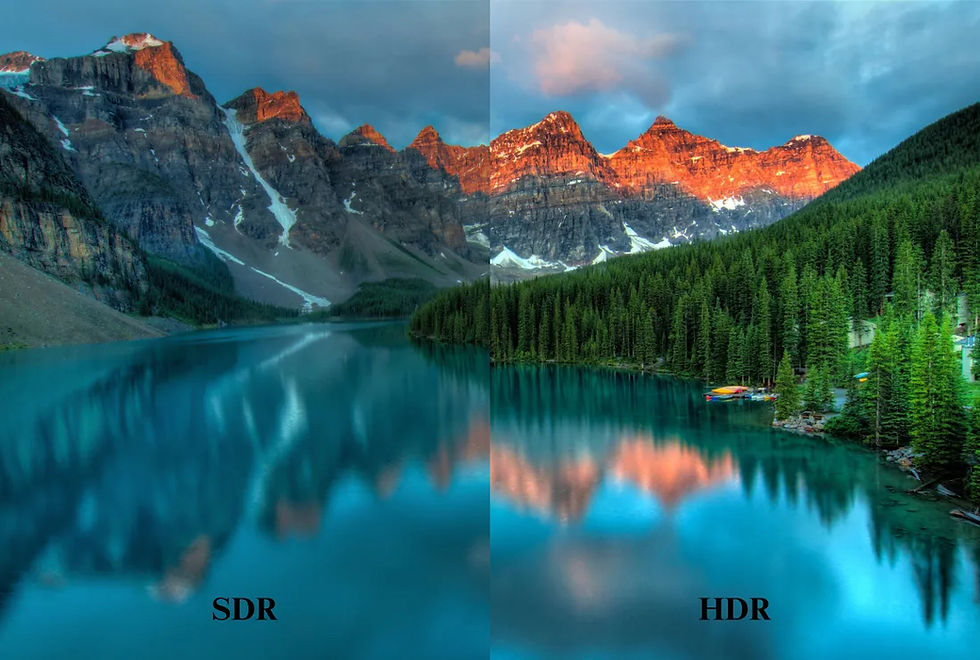
Before I even touched HLG, I had to understand the problem it was solving.
Most of what we’ve shot and delivered over the years lives in SDR. It’s reliable, consistent, and works everywhere but it clips highlights fast and compresses shadows more than I’d like, especially in sports environments.
Then there’s HDR, which looks incredible when everything lines up better highlights, deeper shadows, more realistic color. But it comes with a catch: not everyone is viewing your work on an HDR display.
That gap between what I capture and how people actually see it is real.
That’s exactly where HLG comes in.
What HLG Actually Did for Me


When I first started using HLG on my Panasonic Lumix S1, I wasn’t thinking about gamma curves or technical specs.
I was thinking about one thing:
Can I trust what comes out of this camera without fixing it later?
And honestly that’s where HLG surprised me.
HLG sits right between SDR and HDR. It’s not flat like log, and it’s not baked in like standard profiles. It gives me:
Better highlight roll off
More usable shadow detail
Colors that feel alive but not overcooked
It’s like the camera is doing just enough… without doing too much.
Real World Shooting: Where I Noticed the Difference

I shoot a lot of sports and media day content. If you’ve ever been in those environments, you already know:
Lighting is inconsistent
Highlights are harsh (especially indoor courts)
You don’t always have time to dial everything perfectly
Before HLG, I was constantly making trade-offs:
Expose for highlights → lose shadows
Expose for shadows → blow highlights
With HLG on the Panasonic Lumix S1, I started noticing something different.
Highlights stopped falling apart
Stadium lights, jerseys, reflective surfaces they held detail better. I wasn’t fighting blown out whites nearly as much.
Shadows stayed usable
I could bring back detail without introducing a ton of noise. That matters when you’re delivering images quickly.
The image already looked “finished”

This was the biggest one for me.
There were shots I pulled straight from camera and thought:
“I could deliver this right now.”
That doesn’t happen often.
The Hidden Advantage: One File, Multiple Outcomes
This is where HLG really earns its place.
When I deliver images, I don’t control how people view them:
Phones
Laptops
Social media
HDR-capable displays
HLG gives me a single image that adapts.
On SDR screens → it looks correct
On HDR screens → it expands, showing more depth and contrast
No separate exports. No complicated workflow.
Just one file doing both jobs.
For a working photographer, that’s huge.
Why the LUMIX S1 Handles This So Well
I’ve said it before, and I’ll stand on it:
The Panasonic Lumix S1 is one of the best hybrid cameras under $1000 even today.
And HLG is a big reason why.
This camera wasn’t just built to chase specs. It was engineered with real world use in mind:
Strong dynamic range
Industry leading IBIS
Color profiles that actually solve problems
HLG feels like it belongs here.
It’s not a gimmick. It’s a tool.
And that’s something I’ve come to respect about LUMIX as a whole.
They build cameras that:
Might not get the most hype
Might not win the spec sheet battle
But when you actually use them?
They deliver.
A Thought on “Old vs New” Tech
The Panasonic Lumix S1 came out in 2019.
That’s old in camera years.
But here’s the reality I’ve seen firsthand:
It still performs at a high level in 2026.
Not because it’s the newest…
But because it was built right.
I’ve used newer cameras that should outperform it on paper but in real shooting situations, especially hybrid work, the S1 holds its ground.
That says a lot about engineering.
Final Thoughts
HLG changed how I approach shooting not dramatically, but in a way that matters.
It gave me:
More confidence in my exposures
Better results straight out of camera
Less time fixing things in post
And when you’re balancing photography, business, and delivery timelines that’s everything.
If you’re shooting with the Panasonic Lumix S1 and haven’t really explored HLG yet…
You’re leaving performance on the table.
Because at the end of the day, this isn’t about profiles or specs.
It’s about this:
Getting the shot right the first time and having it hold up no matter where it’s viewed.


Comments